On April 14, 2026, Canada marks Equal Pay Day — the symbolic date that represents how far into the year the average woman must work to earn what the average man earned by December 31, 2025. In other words, women in Canada are working more than three extra months for the same pay.
Equal Pay Day is not a celebration. It is a reminder — and an indictment. Despite decades of activism, legislation, and public commitments to gender equality, economic inequality remains a defining reality of women’s lives in Canada.
What Equal Pay Day Actually Measures
Equal Pay Day is calculated using overall annual earnings, not just hourly wages. This distinction matters. Women are more likely to work part‑time, unpaid overtime, or in precarious employment; they are overrepresented in undervalued care and service sectors; and they are more likely to experience interruptions due to caregiving responsibilities. All of this compounds across a lifetime.
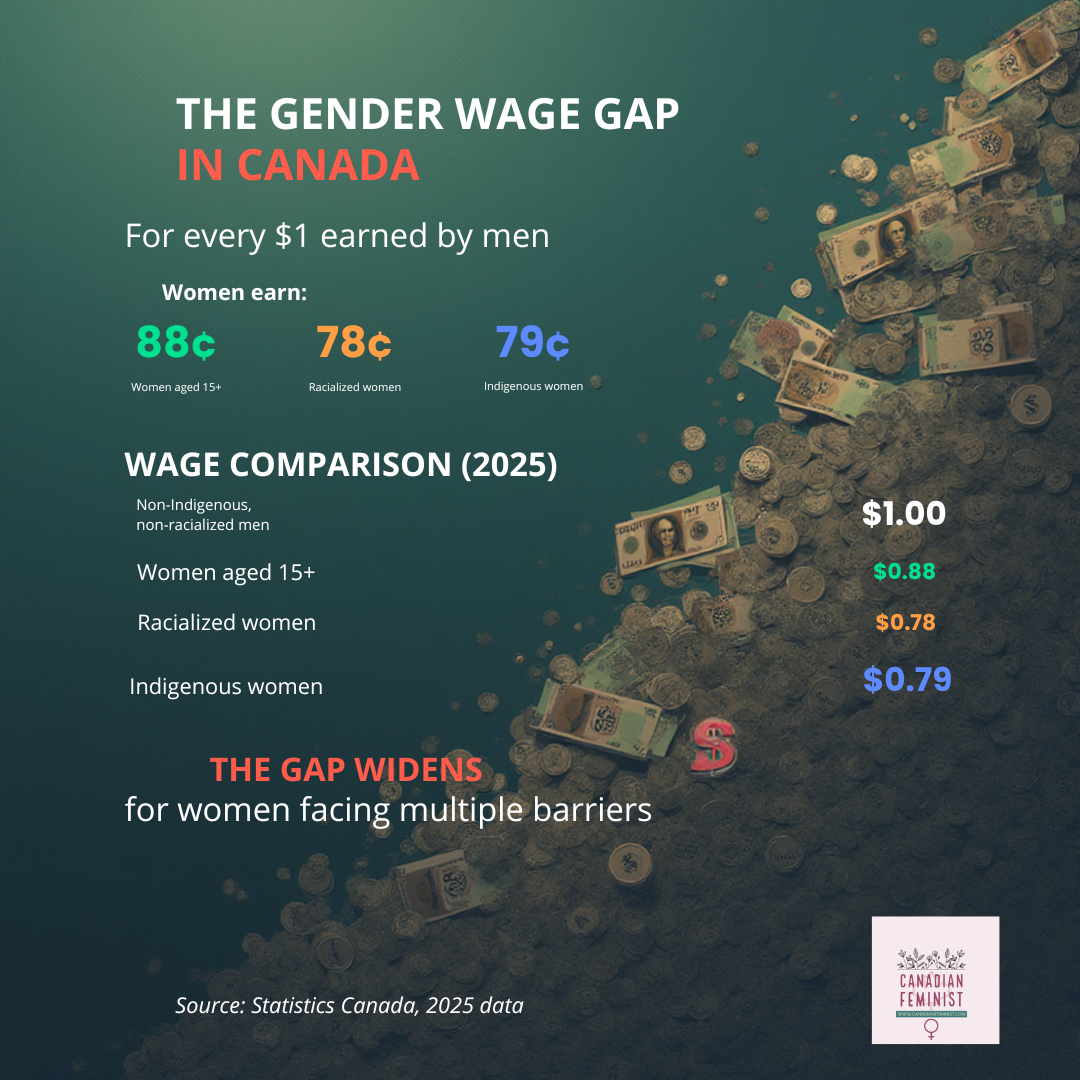
According to the most recent Statistics Canada data, women aged 15 and over earned 88 cents for every dollar earned by men in 2025, with the gap widening significantly for many groups of women.
This is not a problem of individual choices. It is a structural inequality.
The Pay Gap Is Bigger for Women Facing Multiple Barriers
Equal Pay Day reflects an average — and averages hide injustice.
Racialized women, Indigenous women, women with disabilities, immigrant women, and 2SLGBTQIA+ women experience much wider pay gaps than non‑Indigenous, non‑racialized men. Statistics Canada reports that racialized women earned just 78 cents, and Indigenous women 79 cents, for every dollar earned by non‑Indigenous, non‑racialized men in 2025.
Annual earnings gaps are even more severe. When all sources of income and work patterns are taken into account, women in Canada earn roughly 72 cents on the dollar compared to men, amounting to nearly $200 billion in lost wages each year.
This is not marginal. This is systemic economic discrimination.
Care Work: Essential, Feminized, and Undervalued
The Equal Pay Coalition’s 2026 theme, “Care Counts,” is not accidental. Across Canada, the care economy — including child care, elder care, education, health care, and social services — is overwhelmingly staffed by women and consistently underpaid.
Without care work, the economy does not function. Yet care workers continue to earn less, face burnout, and experience chronic underfunding. In Ontario, for example, early childhood educators earn substantially less than the male median wage, contributing to staffing shortages and limited access to child care — which in turn restricts women’s participation in the workforce.
Pay equity cannot be achieved without valuing care.
Pay Equity Is the Law — So Why the Gap?
Canada has pay equity legislation. But enforcement is uneven, coverage is incomplete, and too many employers escape meaningful accountability.
The Pay Equity Commissioner has been clear: proactive compliance, transparency, and monitoring are essential if legislation is to achieve its purpose. Relying on individual complaints places the burden on workers — often women — to challenge unfair systems at personal and professional risk.
Pay equity is not self‑executing. It requires political will, enforcement resources, and sustained public pressure.
Why Equal Pay Day Is a Feminist Issue — And a Justice Issue
The gender pay gap affects everything: housing security, retirement savings, access to education, ability to leave unsafe relationships, health outcomes, and intergenerational wealth. It also costs the entire economy. Advancing gender equality could add up to $150 billion to Canada’s GDP.
Yet progress remains slow. Canada currently ranks 36th globally on the World Economic Forum’s Global Gender Gap Index, with economic participation and opportunity lagging behind educational attainment.
Equal pay is not a “women’s issue.” It is a question of economic justice, human rights, and democracy.
What Real Change Requires
Closing the pay gap means moving beyond symbolism. It requires:
- Stronger enforcement of pay equity laws
- Mandatory pay transparency
- Fair wages in care and public service sectors
- Affordable, accessible child care
- Secure, full‑time employment opportunities
- Recognition of intersecting forms of discrimination
Above all, it requires listening to women — especially those most affected — and acting accordingly.
Equal Pay Day Is a Call to Action
On April 14, wear red, talk about pay, ask hard questions in your workplace, support organizations doing this work, and resist the narrative that equality is inevitable or already achieved.
Equal pay will not arrive quietly. It must be demanded.
Because women have already worked long enough for free.